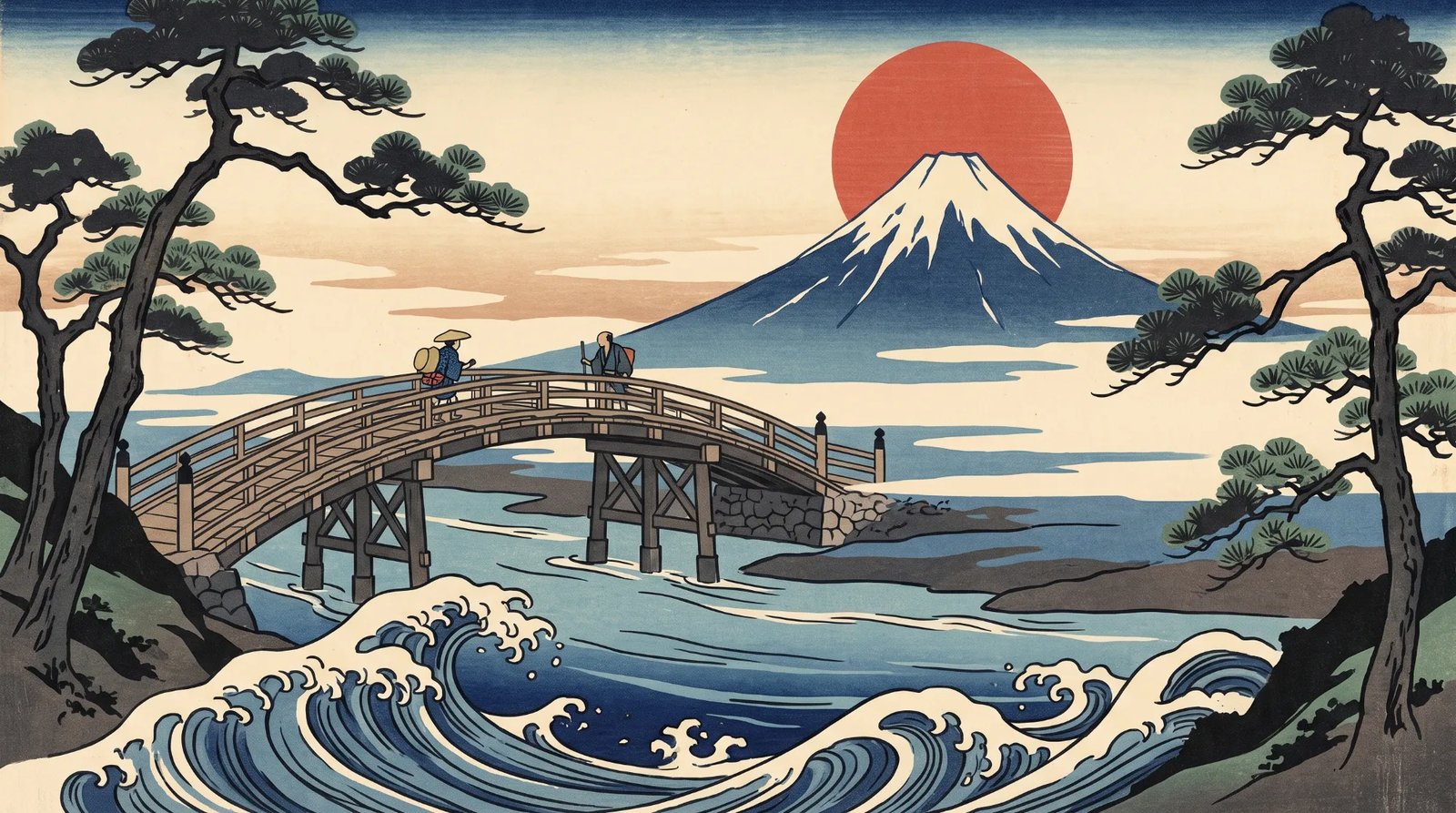
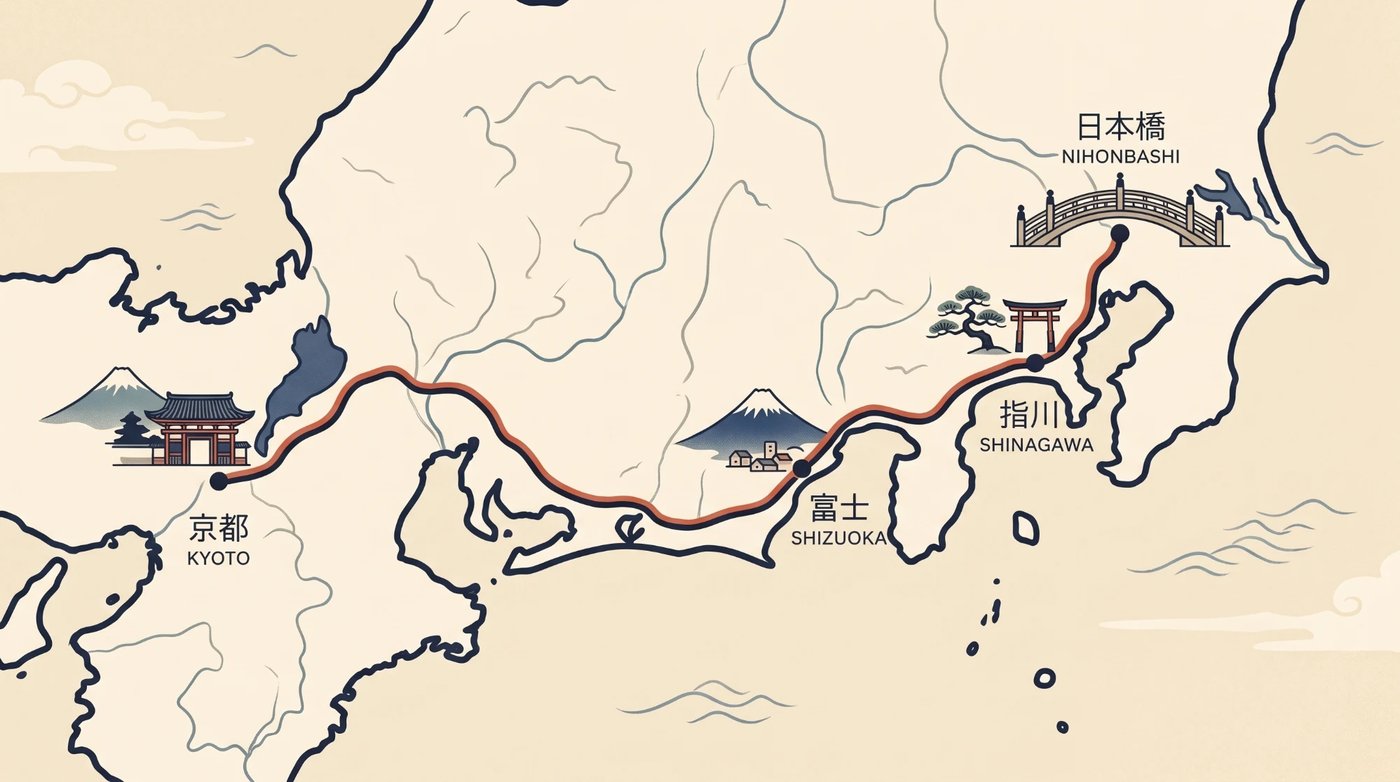
Hiroshige painted this corridor's 53 post-stations two centuries ago. Today the Nozomi bullet train covers the same route from Tokyo to Kyoto in about 2 hours 13 minutes.
Centuries before the Shinkansen existed, the Tōkaidō was Japan's most important road, linking Edo — now Tokyo — to the imperial capital of Kyoto through 53 official post-stations.
Utagawa Hiroshige walked it in 1832 and turned the journey into his most famous work, the woodblock print series The Fifty-Three Stations of the Tōkaidō.
When Japan built its first high-speed rail line in 1964, in time for the Tokyo Olympics, engineers routed it along this same historic corridor and named it the Tōkaidō Shinkansen.
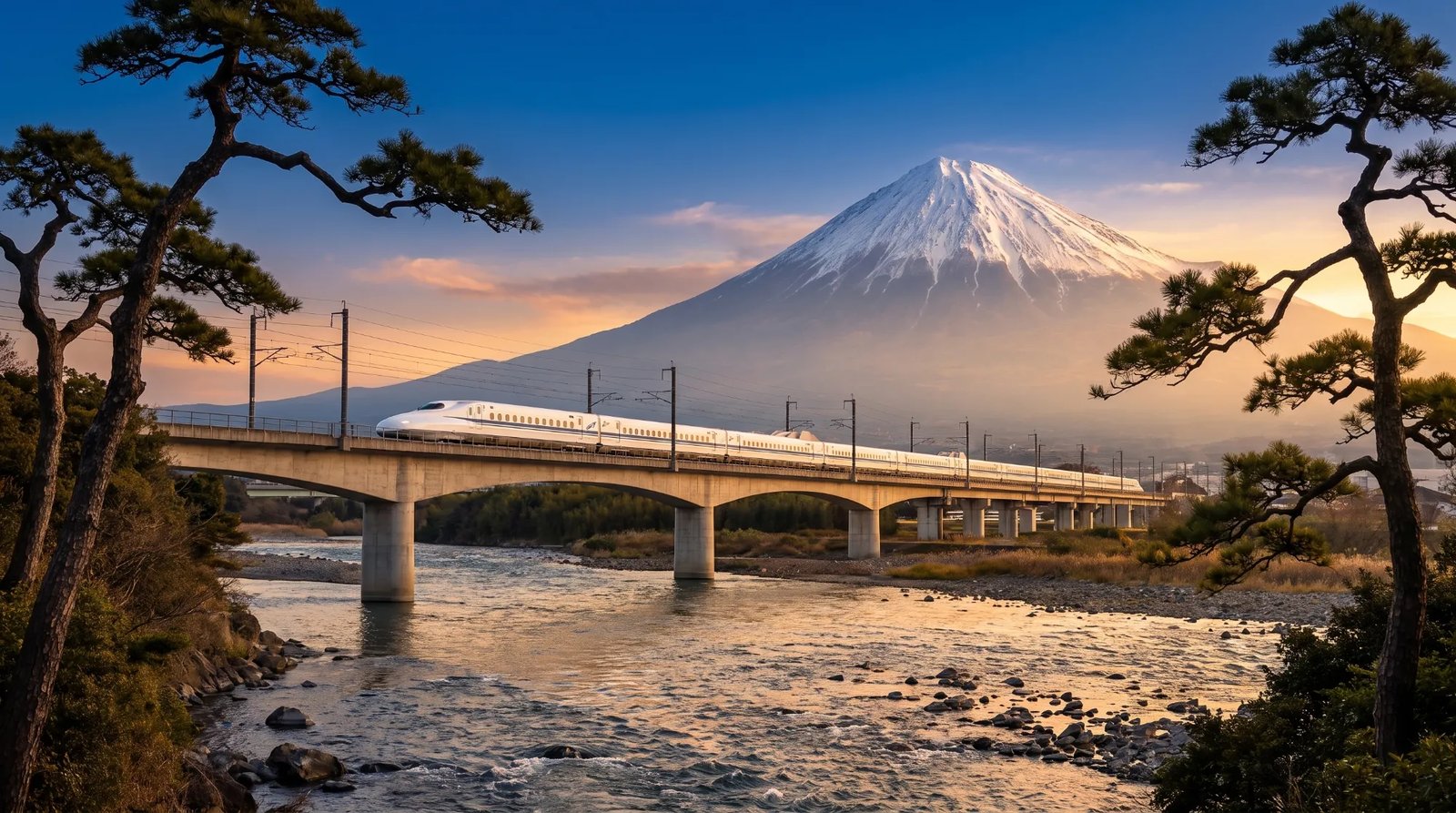
Shinagawa — the very first of Hiroshige's 53 stations leaving Edo — is today one of the Nozomi bullet train's only stops between Tokyo and Nagoya. Much of the modern line threads the same mountains and coastline the old road did, including the Hakone area — which is also why the train's most famous view, Mt. Fuji, was a favorite subject of Hiroshige and other Edo-period artists.
| Train | Journey time | Reserved seat, Ordinary Car (from) | Japan Rail Pass |
|---|---|---|---|
| Nozomi — the fastest, fewest stops | 2h 13–17m | $120 | Supplement required |
| Hikari — a few more stops | ~2h 40m | $92 | Included |
| Kodama — the local train, all stations | ~4h | $92 | Included |
Green Car costs more than Ordinary Car on all three trains for wider 2-2 seating — all Green Car seats are reserved, there's no non-reserved Green Car option. Prices are approximate one-way fares in US dollars, converted from the real yen fare. If you're only making this one trip, pricing a single ticket is usually simpler and more cost-effective than a Japan Rail Pass.
Bilingual ticket machines and staffed JR ticket offices at any major station let you choose your train, seat type and Green Car or Ordinary Car in a few steps.
Tickets can also be booked online in advance through official reservation services, then collected or verified at the gate — handy if you'd rather have your seat locked in before you arrive.
Several ticketing services now issue a QR code you simply scan at the gate — no counter needed. A traditional paper ticket still works everywhere too.
Note: a standard IC card (Suica, Pasmo and similar) alone does not cover Shinkansen fares — it can only be combined with a separate Shinkansen ticket at some gates.
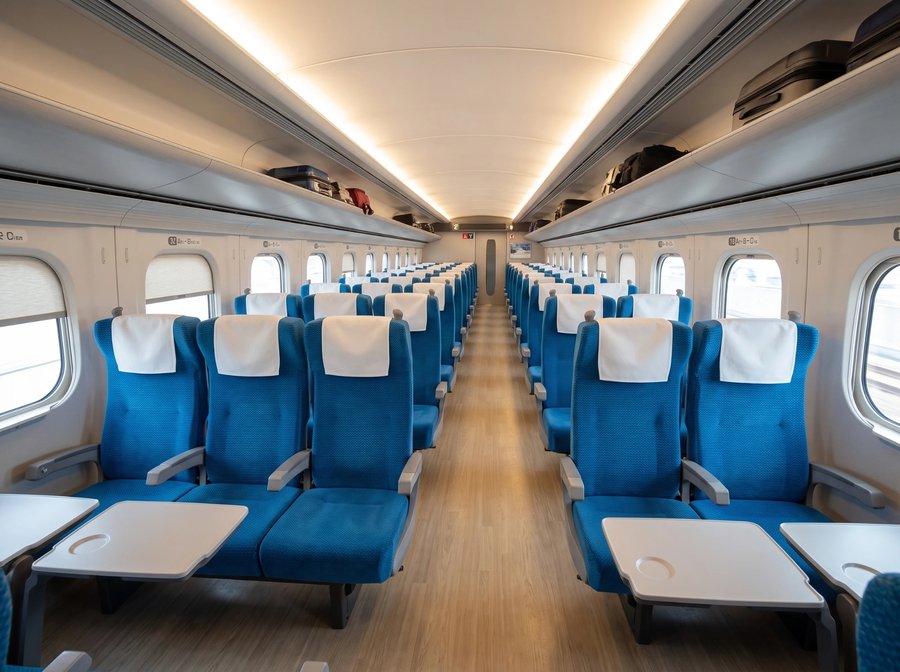
3-2 seating and generous legroom by international standards — perfectly comfortable for the roughly 2-and-a-half-hour Tokyo to Kyoto run. A fold-down tray table and power outlet at every seat or window seat.
Check fares
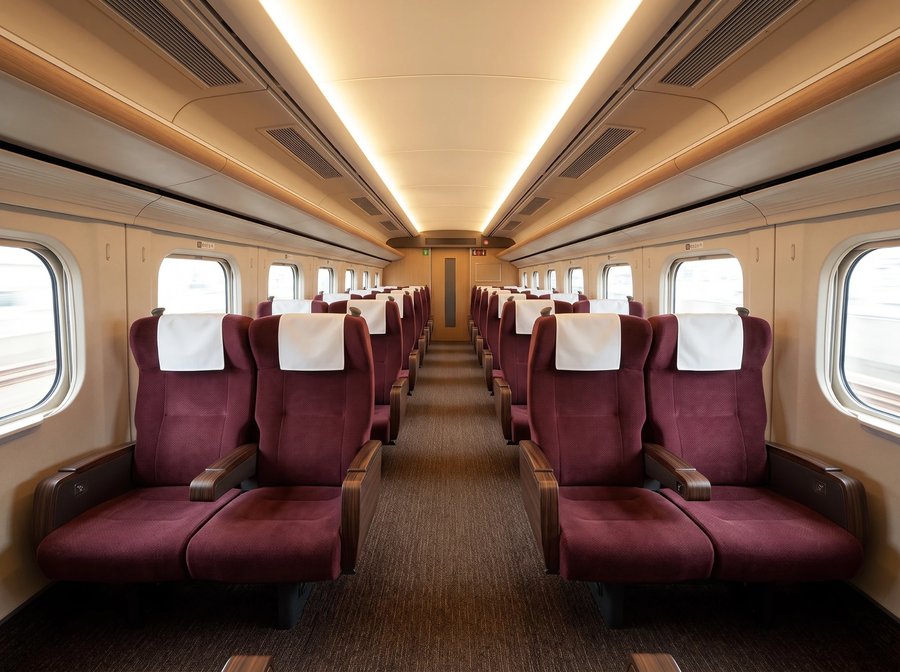
The line's business-class equivalent — 2-2 seating, wider seats and extra legroom, for a moderate premium over Ordinary Car. All Green Car seats are reserved.
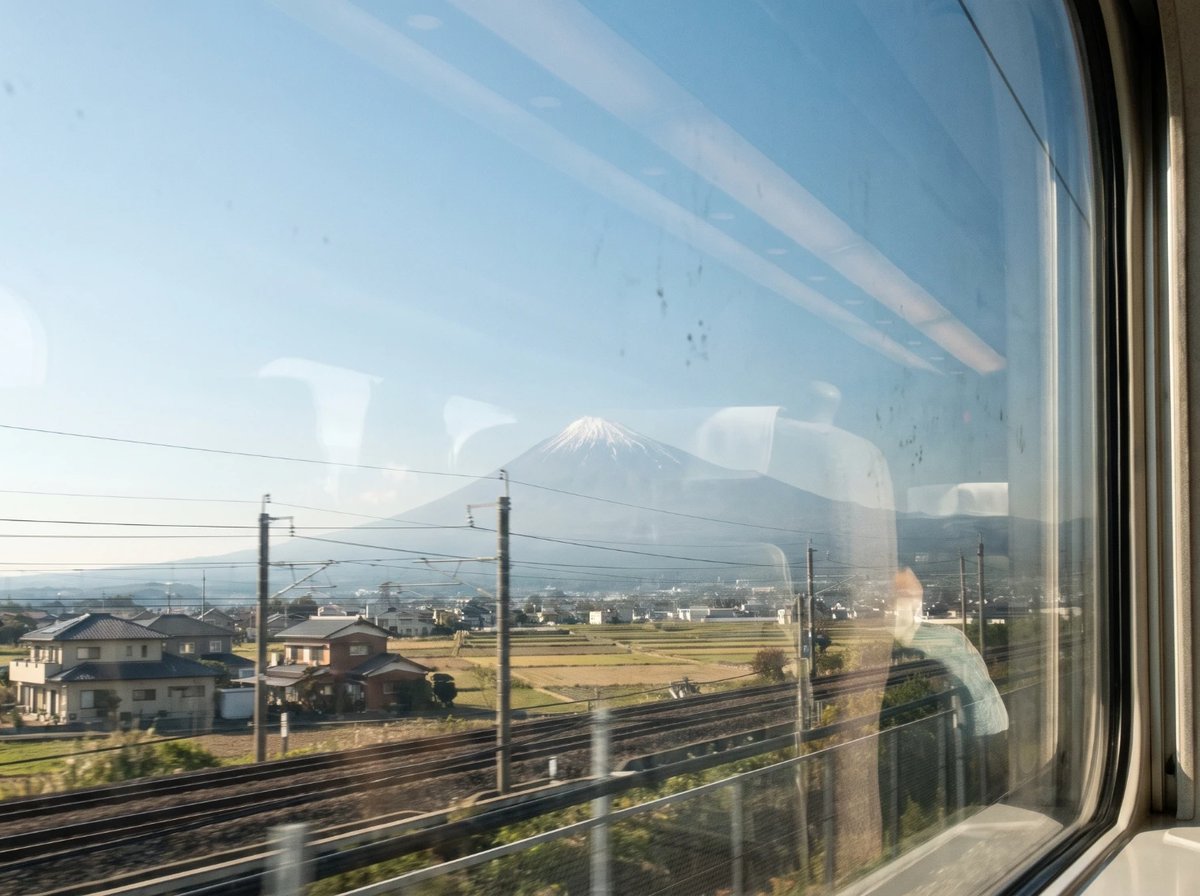
Check faresAbout 45 minutes out of Tokyo, the Shinkansen runs directly past Mt. Fuji — on a clear day, one of the best unplanned views available on any train in Japan.
For the best angle heading toward Kyoto, book a window seat on the right-hand side of the train, near Shin-Fuji Station.
Kyoto Station is a major hub in its own right, with shops, restaurants and connections across the city. Coin lockers for luggage storage are available a short walk from the Shinkansen platforms.
The Kyoto City subway, city buses, and taxis all connect Kyoto Station to the rest of town — the subway and most bus routes reach the city's temples and neighborhoods within 20 to 30 minutes.
Departs directly from Kyoto Station, making Nara — and its famous deer park — an easy day trip in around 45 minutes.
For Gion, the closest stop is Gion-Shijō Station on the Keihan Main Line. Nozomi, Hikari and Kodama trains also continue past Kyoto to Shin-Osaka in around 15 minutes.
Any suitcase larger than 160cm in combined dimensions requires a free but mandatory oversized-luggage seat reservation, booked in advance through the same step as your seat. Luggage over 250cm total is not accepted on board at all.
Cherry blossom season in spring and the autumn foliage season are the two busiest stretches — non-reserved cars fill up fast, so booking a reserved seat in advance is worth it. Shinkansen service on this route does not run overnight; the last trains depart mid-evening.
The fastest Nozomi service takes about 2 hours 13 to 17 minutes to reach Kyoto. Hikari takes around 2 hours 40 minutes, and Kodama, which stops at every station, takes close to 4 hours.
Yes — sit on the right-hand side of the train heading toward Kyoto, around 45 minutes out of Tokyo, near Shin-Fuji Station.
For a single Tokyo to Kyoto trip, pricing a single ticket is usually simpler and often cheaper than a Japan Rail Pass.
A reserved seat costs slightly more but guarantees your spot, which matters most during peak travel seasons and on trains with heavy luggage.
Tokyo Station is the most common starting point, but Shinagawa Station is a convenient alternative if you are coming from Haneda Airport or staying in southern Tokyo.
Yes — any suitcase over 160cm in combined dimensions needs a free oversized-luggage seat reservation, booked in advance. Luggage over 250cm total is not accepted at all.
Yes — most Ordinary Car and Green Car seats on the Tōkaidō Shinkansen have a power outlet, though placement varies slightly by train model.
Yes — bringing your own food and drinks is completely normal, and station kiosks and onboard trolleys sell bento boxes and snacks as well.
Yes — an unused reserved-seat ticket can be refunded before departure for a small cancellation fee, and same-day train changes are usually free at the gate.
No — the Tōkaidō Shinkansen offers Ordinary Car and Green Car only. Gran Class is a premium cabin found on the Tohoku, Hokkaido and some Hokuriku Shinkansen lines further north, not on the Tokyo–Kyoto route.